What would you do if someone suddenly collapsed beside you?
Would you know how to help if a loved one stopped breathing, a colleague suffered a stroke, or a stranger began choking?
These questions inspired Emergency Week 2026 at the University of Ghana Medical Centre (UGMC), which was held under the global Emergency Medicine Day theme, “Safe Space for Emergency Medicine Teams,” with a strong call to “Stop Violence Everywhere.”
For six days, the UGMC Emergency Medicine Department opened its doors to the public, welcomed corporate organizations and community groups, engaged healthcare professionals in important conversations, promoted staff wellbeing, and celebrated the individuals whose dedication keeps emergency care running every day.
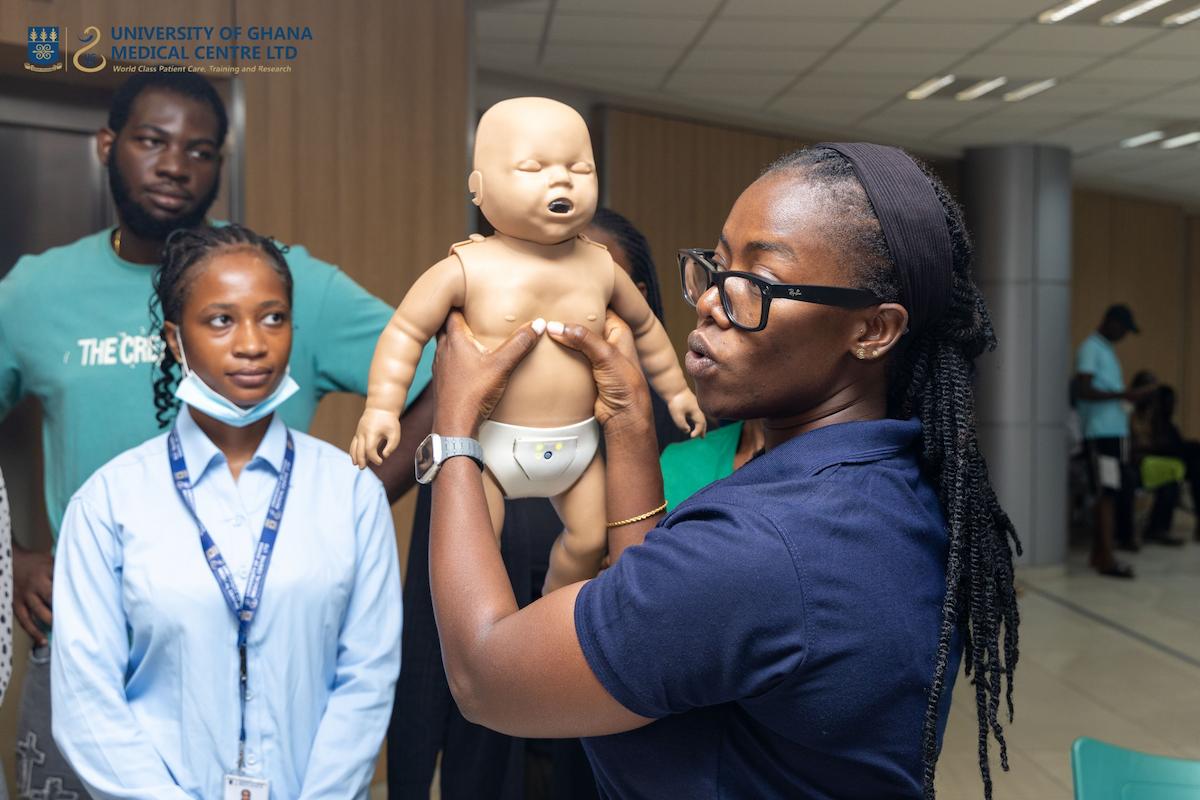
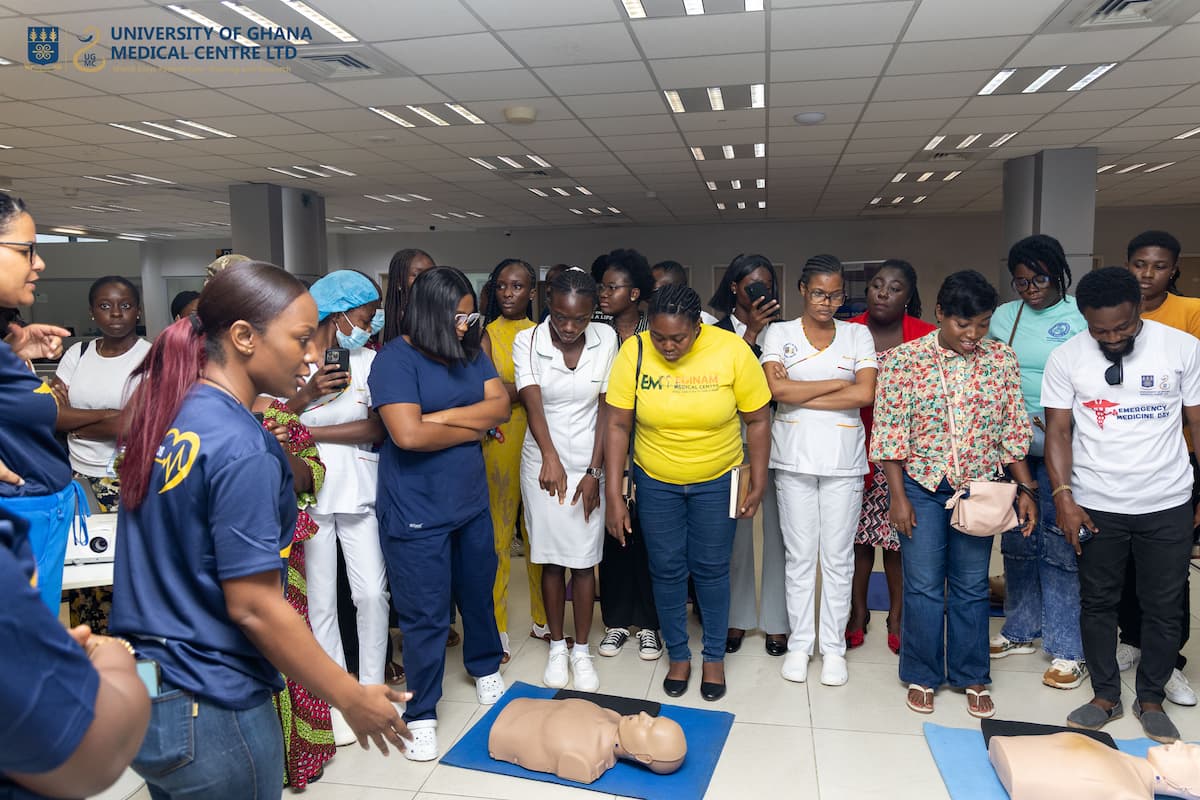
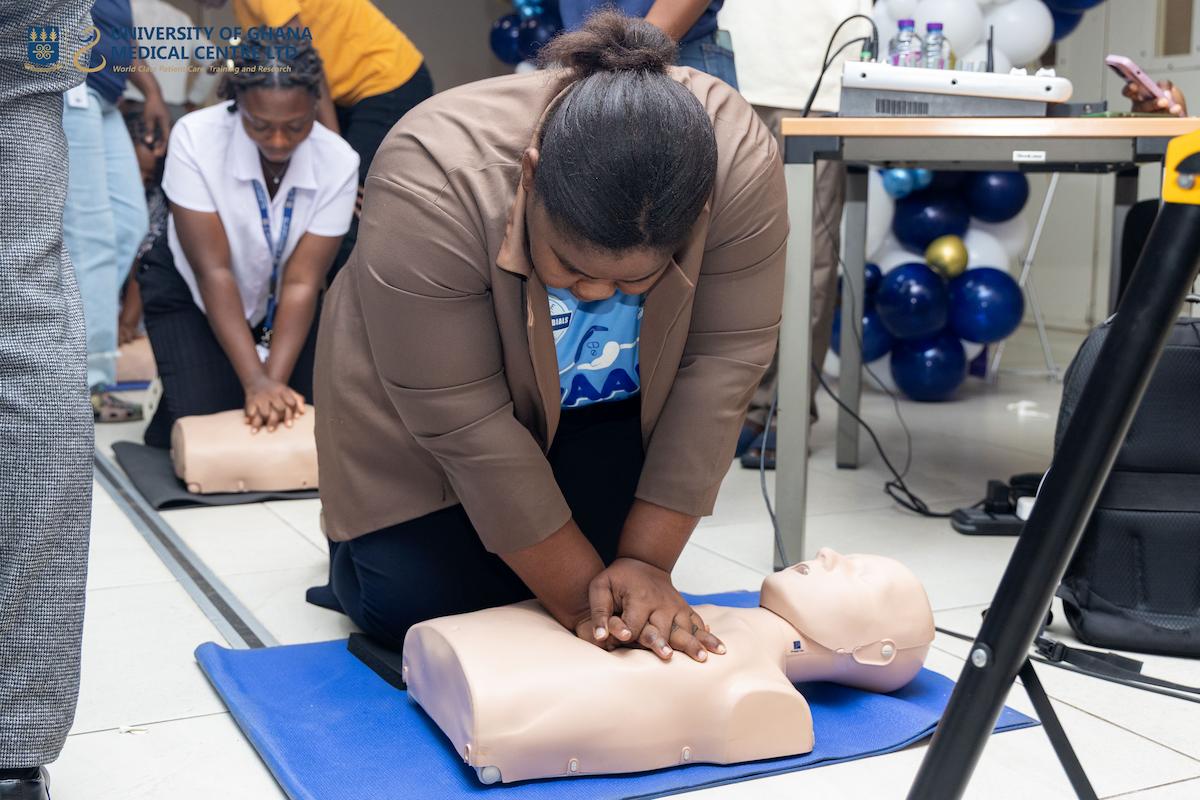
In partnership with Code Red Ghana, the Emergency Medicine Department organized free First Aid and CPR training sessions for members of the public. Corporate managers, students, business owners, teachers, and professionals from various sectors gathered with one common purpose to learn how to save lives before professional help arrives.
By the end of the sessions, more than 100 participants had acquired valuable emergency response skills. What began as a training exercise had transformed ordinary citizens into potential first responders, reinforcing the reality that emergency care often starts long before a patient arrives at the hospital.
As Emergency Week continued, attention turned to another important aspect of emergency care the systems, protections, and support structures that enable healthcare professionals to perform their duties safely and effectively. Hence the Department hosted a webinar on the theme, “Duty of Care and the Legal Framework of Emergency Care.” Moderated by Dr. Godfred Takyi and Dr. Nana Aba Dawson, the session brought together Dr. Rockefeller A. Oteng, Consultant Emergency Physician and Clinical Associate Professor of Emergency Medicine at the University of Michigan Medical School; Lawyer Frank Amponsah-Darko, Head of Legal at UGMC; and Emmanuel Agyemang, Emergency Nurse Specialist.
Drawing on their diverse professional experiences, the speakers explored healthcare worker protection, workplace safety, patient rights, professional accountability, and the legal responsibilities surrounding emergency care delivery.
The webinar attracted about 150 participants, with interest extending beyond available capacity. The engaging discussions reflected the growing recognition of the need to build safer and stronger emergency care systems for both healthcare workers and patients.
Recognizing the importance of mental wellbeing, the Department also organized a second webinar focused on mental health in emergency medicine.
Led by Specialist Psychiatrist Dr. Dzifa Dellor and Clinical Psychologist Dr. Paul Kumi, both of UGMC, the session encouraged participants to reflect on burnout, emotional resilience, workplace stress, and the importance of supporting colleagues who may be struggling.
The discussion created a safe space for honest conversations about mental health and wellbeing. Participants explored strategies for coping with stress, maintaining resilience, and fostering supportive work environments.
Amid the learning and advocacy, there was also time to celebrate and so for a department accustomed to putting patients first, photography and videography sessions offered a rare opportunity to step away briefly from the intensity of emergency care and focus on the people behind the profession.
The spirit of teamwork extended beyond the hospital walls through a friendly novelty football match between the Emergency Medicine teams of UGMC and Korle Bu Teaching Hospital.
Although Korle Bu emerged victorious with a 3–1 score line, the true victory was found in the camaraderie, networking, and opportunity for healthcare professionals to de-stress and connect outside the clinical environment.
In partnership with Code Red Ghana, the Emergency Medicine Department also offered CPR training for representatives from corporate organizations including Burst Energy, Serene Insurance, women’s groups, business owners, and other stakeholders for First Aid and Basic Life Support training.
By the end of the week was more than 200 members of the public had received free emergency response training. Healthcare professionals had engaged in meaningful discussions, learned from experienced practitioners, and explored strategies for protecting both physical and mental wellbeing.
The week served as a reminder that creating safe spaces for emergency medicine teams ultimately creates safer communities for everyone. Most importantly, Emergency Week 2026 served as a reminder that emergency medicine is ultimately about people in need of urgent care on time.